Autonomous Driving Needs More Than Better Vision. It Needs Grip Awareness.
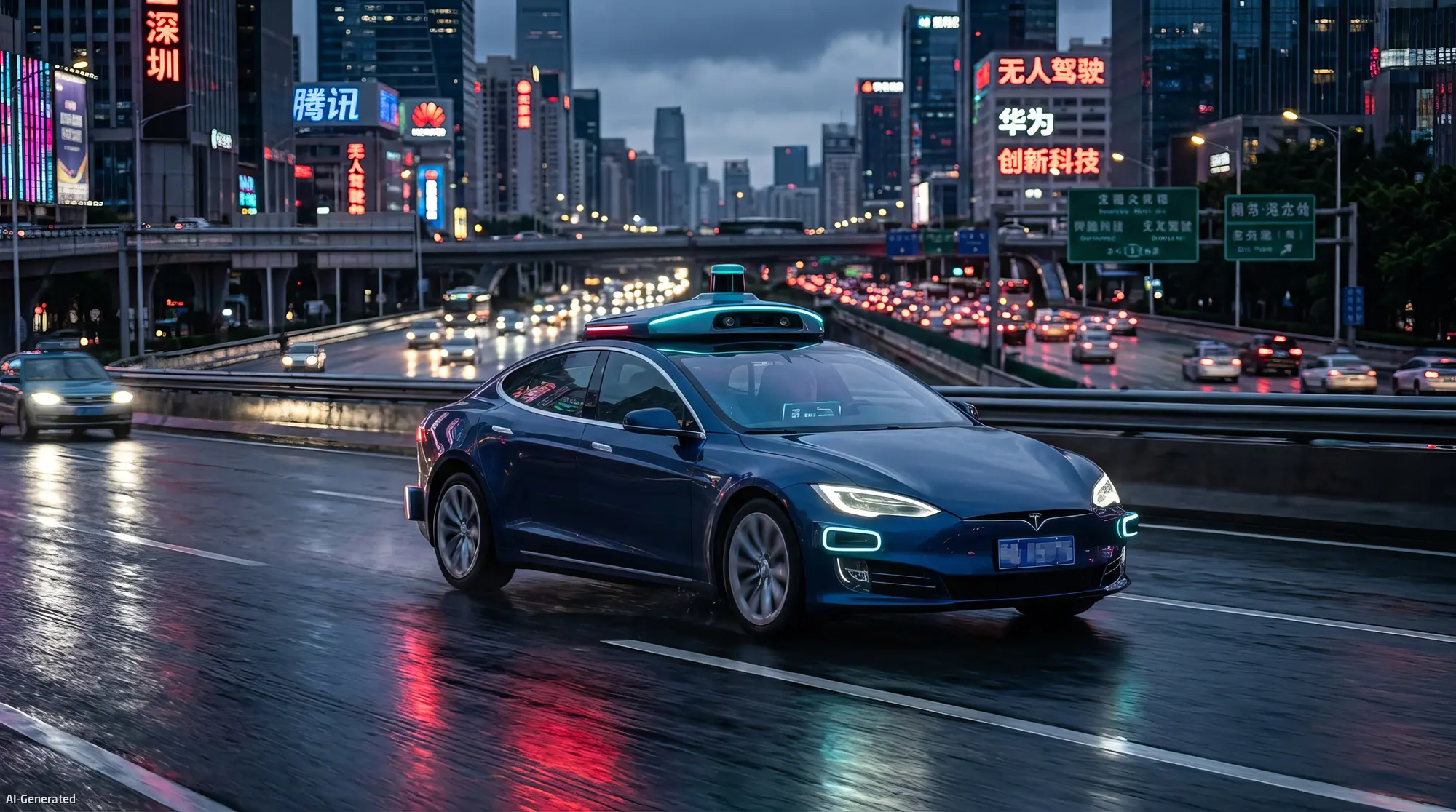
A recent article published by The Conversation authored by Pablo Hernández Cámara from the Universitat de València (University of Valencia) and titled “Self-driving cars struggle to see at night or in fog” highlights a familiar challenge for autonomous driving: today’s AI vision systems can perform accurately in clear conditions, but become vulnerable when the environment changes. Rain, low grip, harsh environmental conditions and sudden variations in light can make it harder for standard systems to operate safely.
The research presented in the article explores a promising direction: making artificial intelligence more robust by taking inspiration from the human brain. More specifically, the study describes a mechanism similar to the brain’s “volume control”, where visual signals are amplified or reduced depending on context. In tests involving dangerous driving conditions, the brain-inspired AI model performed more than 20% better than its unmodified counterpart.
It is an important signal for the industry.
Autonomous driving will not become reliable in the real world by performing only under ideal conditions. It must remain stable when conditions change quickly, when visibility decreases, when the road surface becomes unpredictable and when the vehicle needs to interpret more than what cameras, radar or LiDAR can see.
Because the real world is not only a visual problem. It is also a physical one.
Seeing the road is not the same as understanding it
The automotive industry has made enormous progress in perception. Vehicles can recognize lanes, objects, signs, pedestrians and surrounding traffic with increasing accuracy.
But safety is not decided only by what the vehicle sees.
It is decided by how the vehicle understands the relationship between its own dynamics and the surface beneath it.
A road can look safe and still be dangerous. A surface can appear normal and still offer low grip. A vehicle can detect an obstacle and still lose control if friction changes faster than the system can react.
This is where low-grip conditions become one of the most critical challenges for ADAS and autonomous driving.
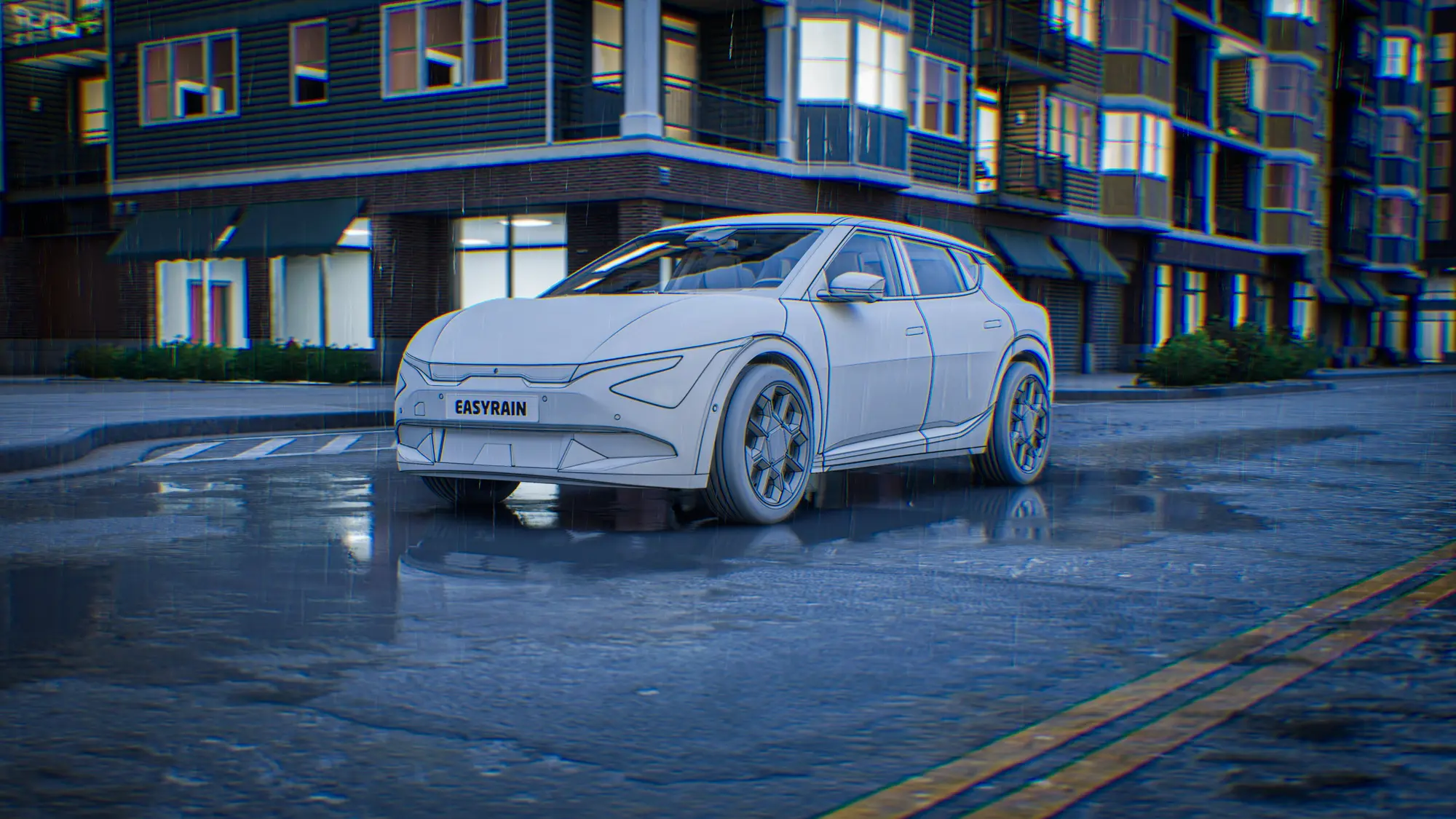
Heavy wet roads, aquaplaning, snow, ice, degraded asphalt and irregular surfaces are not simply weather scenarios. They are the moment in which the physical connection between vehicle and road changes. And when grip changes, the vehicle’s decisions must change with it.
From visual perception to haptic perception
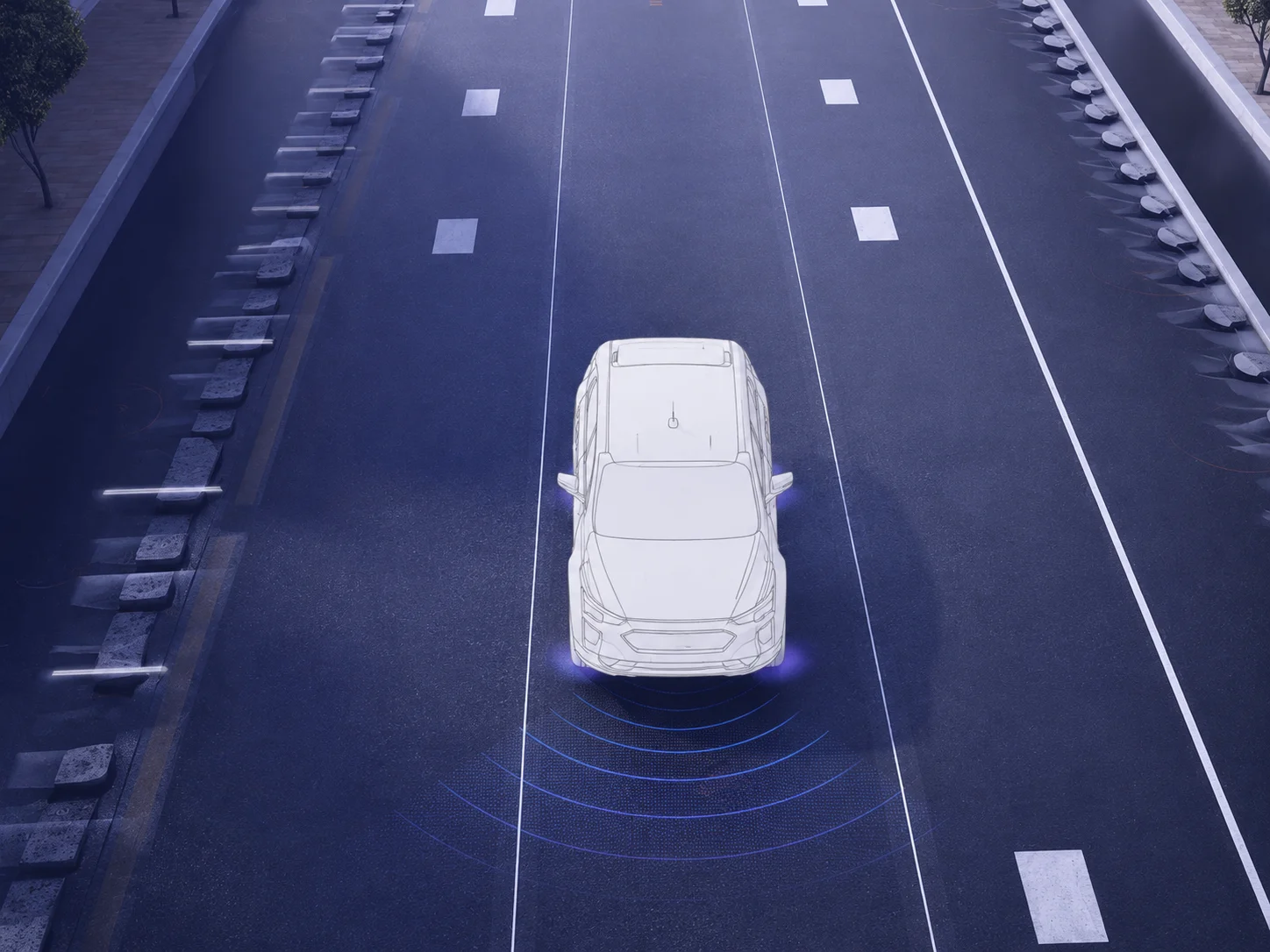
Human drivers do not rely on vision alone. They see the road, but they also feel it. Through steering, vibration, acceleration, braking and vehicle response, they perceive when grip is decreasing. They may not express it as data, but they understand it as behavior. For autonomous systems, this physical layer of perception must become measurable.
This is the role of haptic sense in vehicle intelligence: enabling the vehicle to interpret the road through its own dynamic signals, not only through external perception sensors.
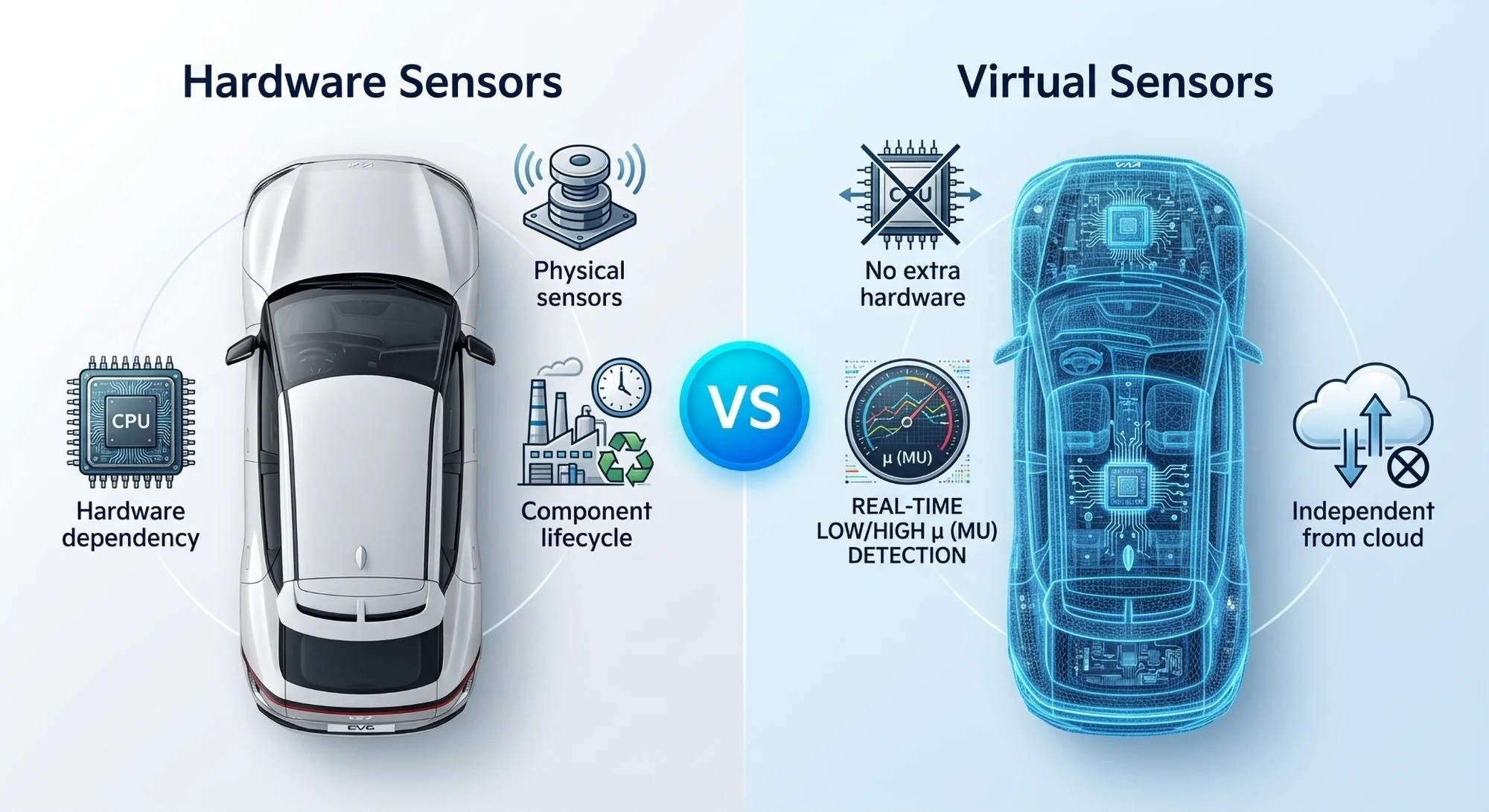
In this context, virtual sensing becomes a key technology. It allows the vehicle to transform existing onboard signals into real-time awareness of road grip and vehicle condition, without adding unnecessary hardware complexity.
For Easyrain, this is the foundation of real-world autonomy.
A vehicle that can only see the world is still incomplete.
A vehicle that can also feel the road becomes more aware, more adaptive and more reliable when conditions become critical.
The missing layer in real-world autonomy
The article’s brain-inspired approach points in the right direction: future AI systems must be more adaptive, more robust and less dependent on ideal data.
But visual robustness is only one part of the path. A study by the American Automobile Association (AAA) demonstrated that in simulated rain, lane keeping assistance failed 69% of the time, and automatic emergency braking resulted in collisions in up to 33% of test runs at 35 mph.
The next generation of safety systems will need to combine different layers of intelligence:
- Sense – understanding grip and vehicle condition in real time.
- Act – intervening before loss of control becomes irreversible.
- Share – transforming vehicle signals into road intelligence for the wider mobility ecosystem.
This is why Easyrain works on a modular ecosystem that brings together virtual sensing, active safety and cloud intelligence.
DAI – Virtual Sensor Platform interprets vehicle signals to detect grip and vehicle condition in real time.
AIS – Active Safety System physically intervenes when restoring grip becomes necessary.
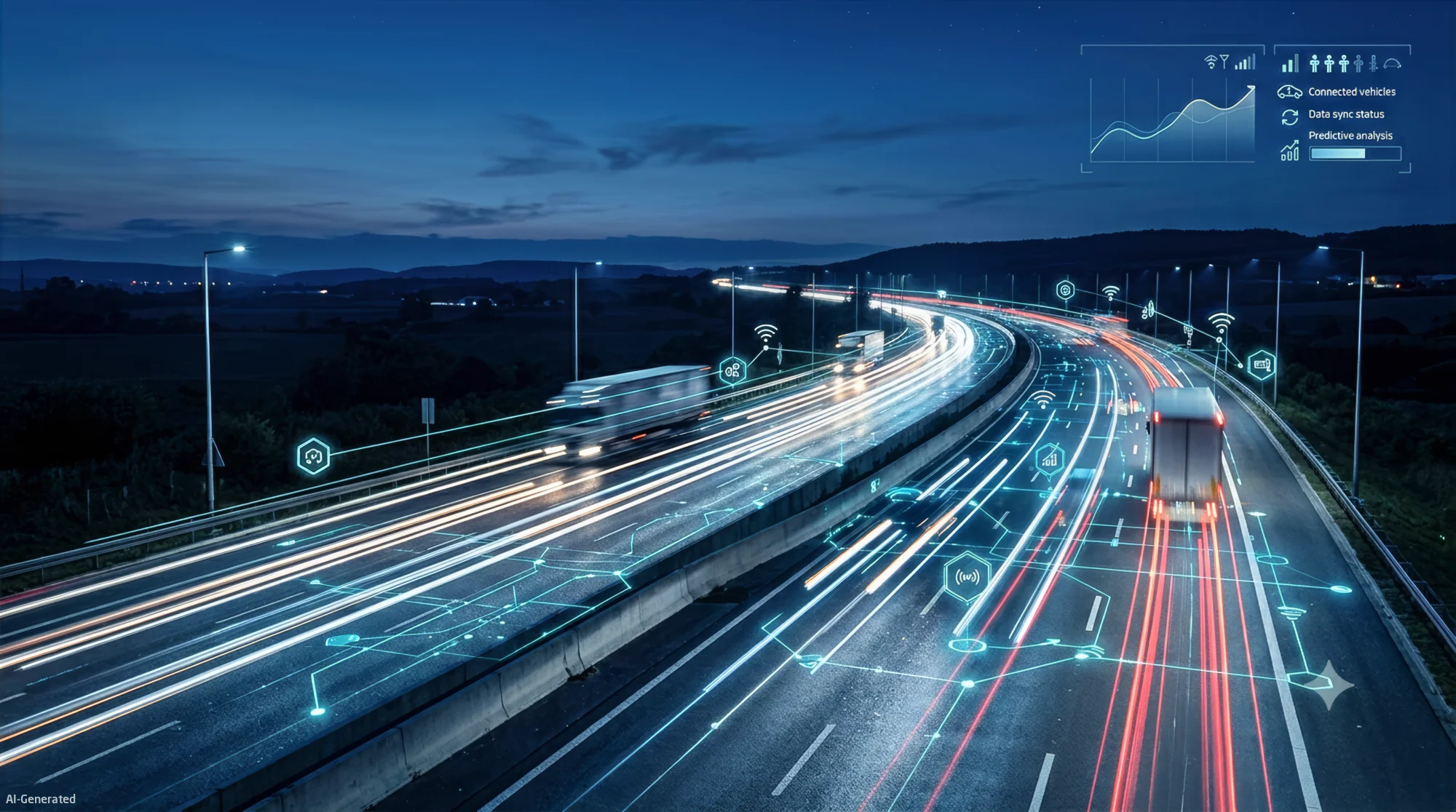
ERC – Cloud Infrastructure turns vehicle and road signals into shared intelligence for fleets, infrastructure and future mobility services.
Together, these layers address a structural limit of autonomy: the need to remain reliable not only when the world is visible, but when the road becomes physically unpredictable.
Reliability starts before the critical event
In critical conditions, milliseconds matter.
The safest decision is not the one taken after the vehicle has already lost control. It is the one supported by early awareness, physical understanding and the ability to adapt before the situation becomes irreversible.
That is why low-grip intelligence is not a secondary feature. It is a foundation for ADAS robustness, autonomous driving continuity and safer mobility.
Better vision will make autonomous vehicles stronger.
But vision alone is not enough.
To operate safely in the real world, vehicles must understand the condition that defines every movement, every braking event and every steering response: grip.
Real-world autonomy starts there.