Auto China 2026: The Automotive Axis Shifts from Electric to Software, but Physical Robustness Remains the Open Challenge
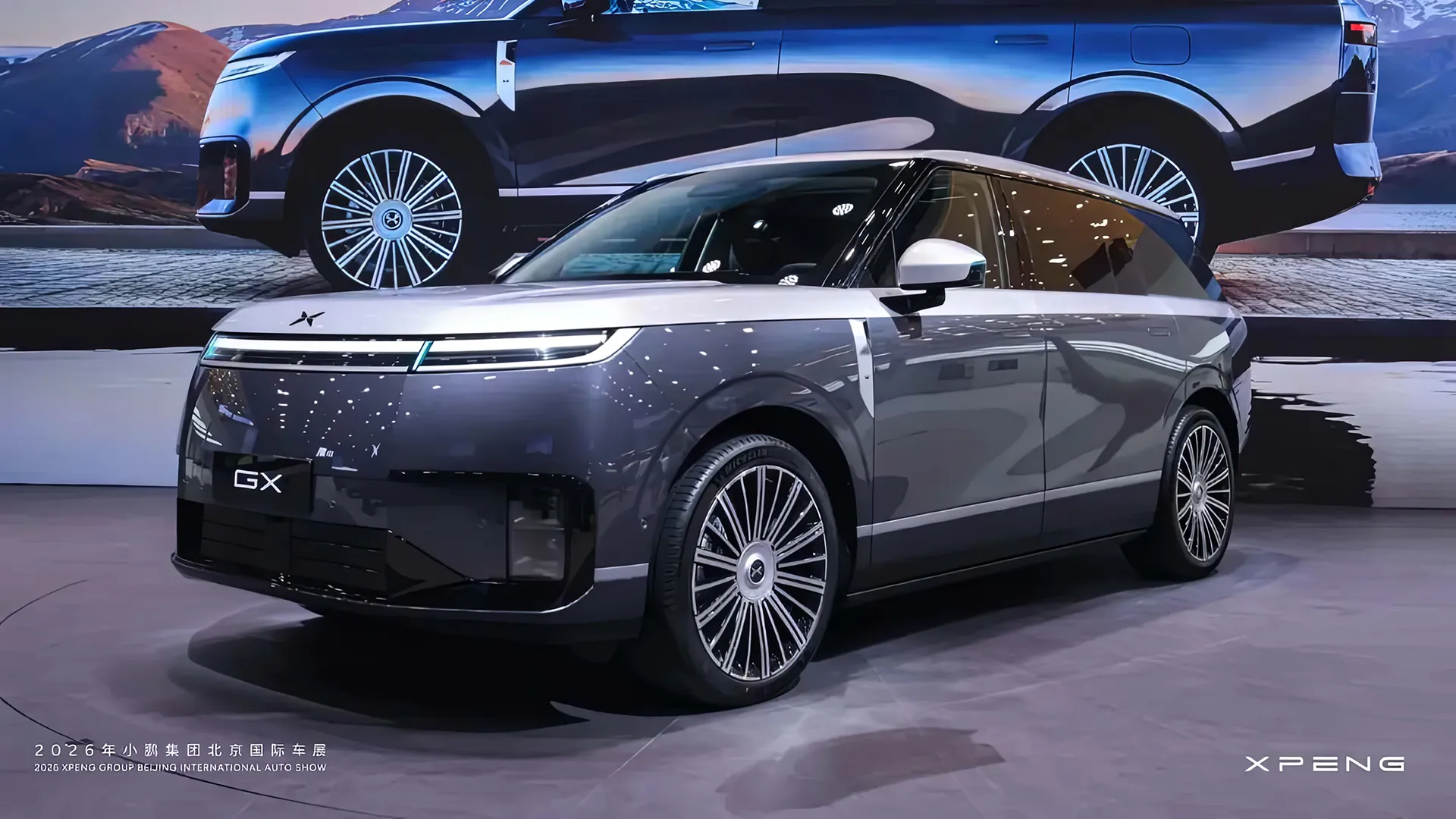
The visit to Auto China 2026 provided a clear indication: electrification, while remaining a necessary industrial foundation, is no longer the primary ground for competitive differentiation. Competition has shifted toward the intelligent vehicle, specifically the quality of the software stack, Artificial Intelligence (AI) integration, centralized electronic architectures, and the maturity of Advanced Driver Assistance Systems (ADAS) and automated driving functions. With a massive exhibition area of 380,000 square meters, the event highlights China’s role as the industrial forge where the rhythm and priorities of automotive development are now defined. At Beijing, the market redefined competitiveness not just through hardware, but through time-to-market and software maturity.
The Facts: Electrification as a Mature Baseline
Electrification has reached a mature dimension where most Original Equipment Manufacturers (OEMs) possess credible EV platforms and robust supply chains. The focus has moved from “making an electric car” to “making the software that governs it”. A standout example is BYD’s Super e-Platform, featuring a 1000V architecture and 1000 kW charging power. This platform, paired with a 10C-rate battery, can recover 400 km of range in just 5 minutes. Such industrial scale confirms that ultra-fast charging is becoming a premium commodity, forcing brands to seek differentiation elsewhere, primarily in the digital ecosystem and “smart vehicle” capabilities.
The Impact: The Rise of the Smart Vehicle
The “smart vehicle” has become the new battlefield where value is concentrated in an OEM’s ability to rapidly update software stacks and train AI models. We are seeing a transition toward Urban Navigation on Autopilot (NOA), where vehicles increasingly rely on real-time data and onboard learning rather than static high-definition maps. This iteration-driven logic treats the car as a software product—subject to continuous updates and data-driven improvements. Consequently, Chinese players are leading not by a single unreachable technology, but by their superior speed in integrating complex sensors and chassis control into a unified, sellable feature set.
Key Data
- Exhibition Scale: Approximately 380,000 square meters of exhibition space across two major Beijing hubs.
- Charging Performance: BYD Super e-Platform supports 1000V / 1000A / 1000kW charging with a 10C battery rating.
- Regulatory Deadlines: EU General Safety Regulation (GSR2) phase 2 mandated ADAS for all new vehicles as of July 2024, with further expansions in July 2026.
- Safety Benchmarks: Euro NCAP 2026 protocols introduce “Safe Driving” and “Crash Avoidance” as core pillars with higher sensitivity to vulnerable road users (VRUs).
Market and Regulatory Context
The European regulatory landscape is significantly raising the bar for automated systems. Regulation (EU) 2019/2144 (GSR) establishes that automated vehicles must monitor driver availability and record event data. Furthermore, UN Regulation No. 157 and No. 79 are evolving to refine lateral control and automated lane-keeping performance. In China, new rules for Data Storage Systems for Automated Driving (DSSAD) and secure cross-border data transfer are formalizing how AI automotive data is treated as a strategic asset.
Challenges: The Gap in Physical Reality
Despite the digital advancements showcased by XPeng’s AI-first approach and Huawei’s sensor fusion engineering, a critical structural limit remains: the modeling of the road surface. Most systems focus on traffic perception and path planning but lack a deep physical understanding of tire-to-road friction. If the actual grip level is lower than what the software model assumes—due to water, ice, or uneven terrain—the quality of the AI’s decision degrades immediately. This “physical blindness” represents a major vulnerability in current ADAS and autonomous stacks, which remain dependent on ideal conditions for peak performance.

Future Perspectives: Bridging Digital AI and Physical Safety
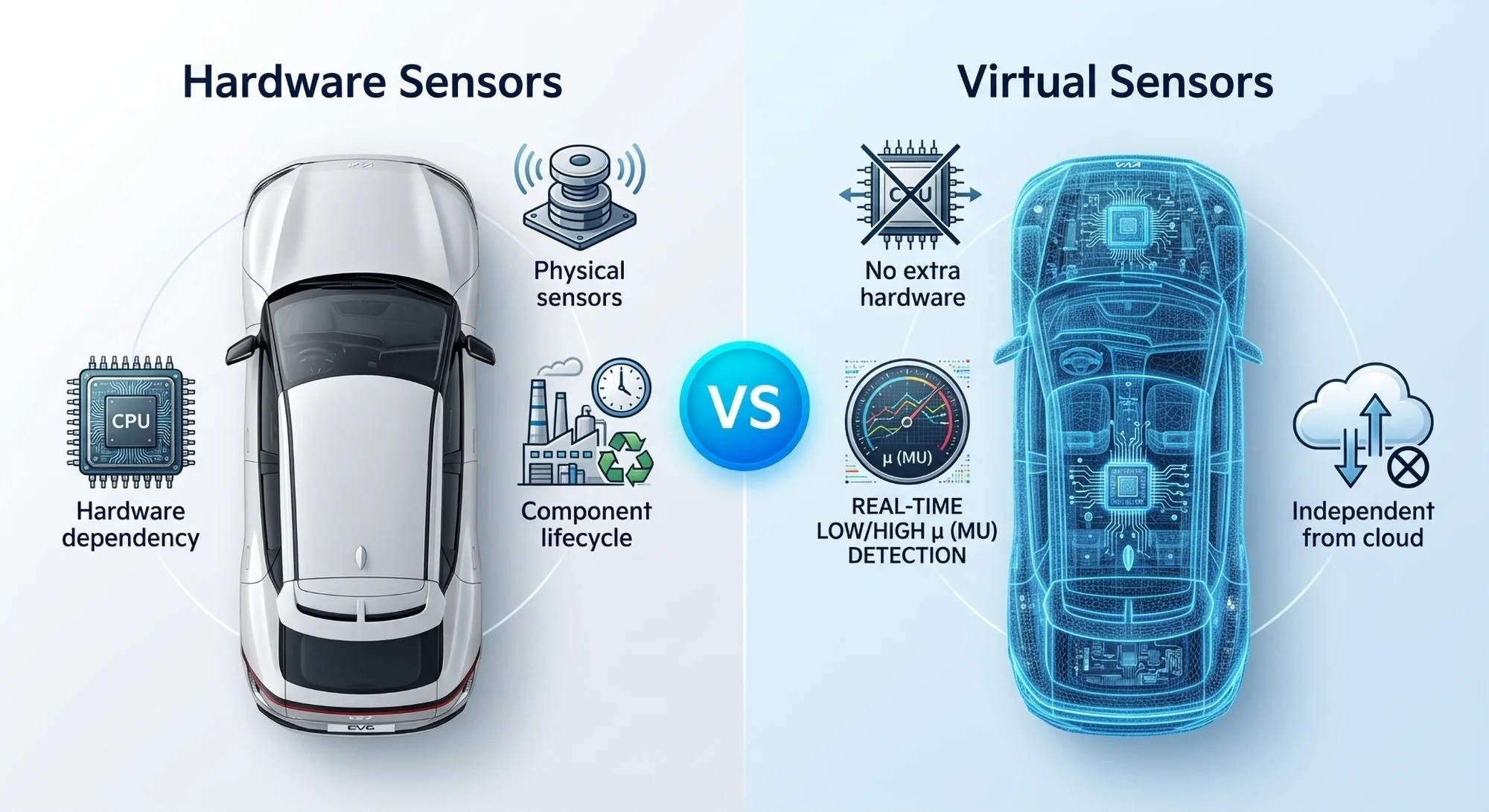
The next 2-5 years will see a convergence where digital “intelligence” must be grounded in physical “awareness.” Technologies like the DAI – VIRTUAL SENSOR PLATFORM are positioned to fill this void by providing real-time road surface and vehicle health detection without added hardware. As Euro NCAP 2026 protocols begin to prioritize the “quality” and “smoothness” of intervention, the ability to anticipate grip loss will move from a complementary feature to a systemic requirement. We expect to see more “software-first” OEMs integrating active safety layers, such as the AIS – ACTIVE SAFETY SYSTEM, to restore grip in critical conditions like aquaplaning.
Conclusion
Auto China 2026 confirms that the automotive industry has successfully transitioned to a software-defined era, yet the reliability of these systems in degraded environments is the next frontier. By integrating virtual sensing capabilities, manufacturers can improve the resilience of their ADAS stacks against real-world hazards such as low friction or hydroplaning. Solutions like the ERC – CLOUD INFRASTRUCTURE will further enhance this safety by sharing road intelligence across fleets, turning individual vehicle data into collective predictive protection. Today, it is possible to achieve a 20% reduction in braking distance on heavy wet surfaces through active systems, a benchmark that underscores the vital necessity of merging digital AI with physical road awareness.