Vehicle-to-Vehicle Communication: Why Grip Data Is Becoming the New Safety Currency
Introduction
Vehicle-to-Vehicle (V2V) communication has long been associated with collision warnings and traffic flow optimization. But a more consequential shift is now underway: the data being exchanged between vehicles is evolving from generic positional signals toward precise physical measurements – specifically, real-time grip conditions at the tire-road interface. As autonomous driving systems and advanced driver assistance technologies become standard across vehicle segments, the quality of shared data matters more than its volume. The ability to detect and transmit low-friction conditions – wet asphalt, snow, ice, partial aquaplaning – in milliseconds is emerging as a critical layer of vehicle safety infrastructure.
What Happened
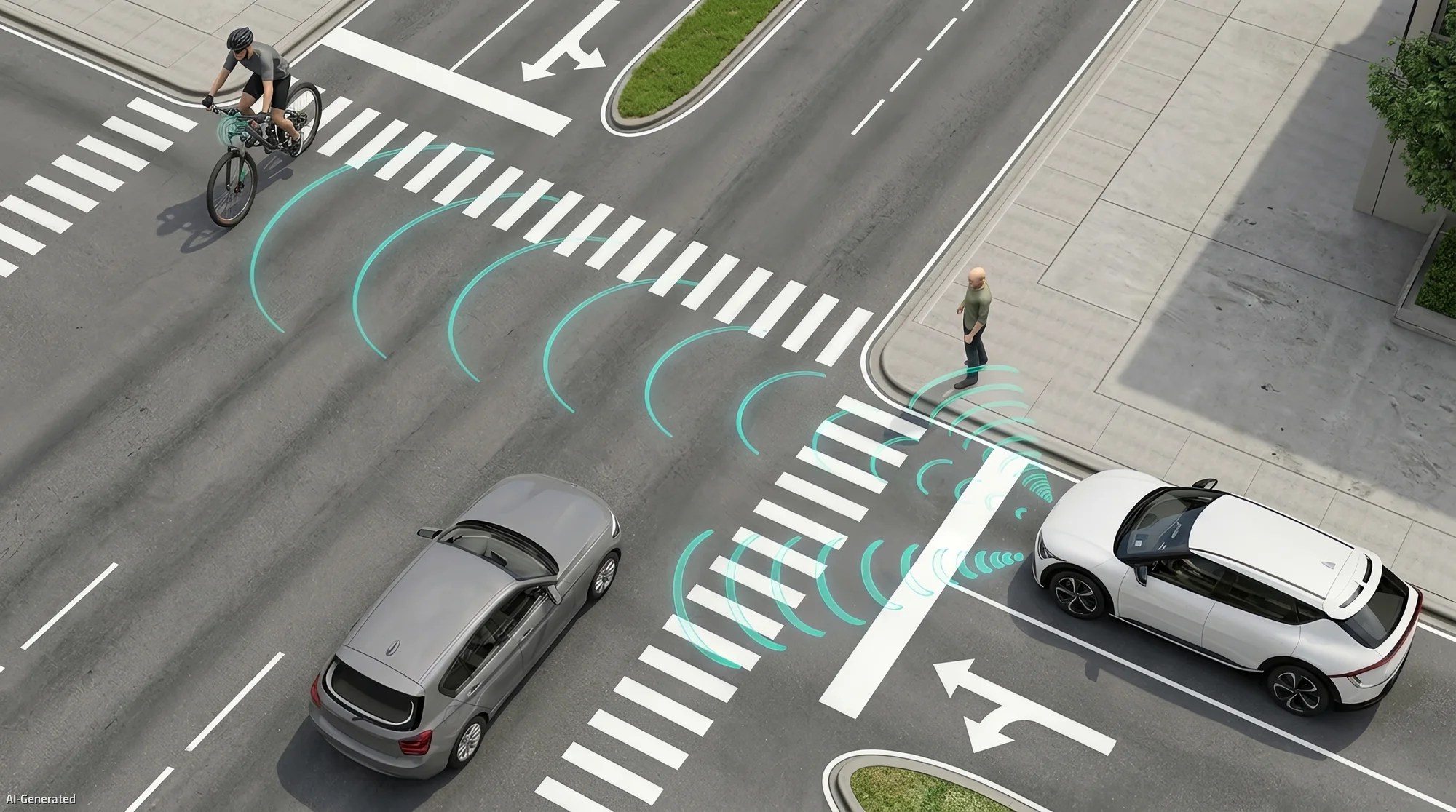
For most of its development history, V2V communication focused on location, speed, and heading – the basic geometry of vehicles in motion. Standards such as DSRC (Dedicated Short-Range Communications) and C-V2X (Cellular Vehicle-to-Everything) were designed primarily to support proximity warnings and intersection management. These protocols remain foundational, but they were not built with the physical state of the road surface in mind.
The shift now occurring treats the vehicle itself as a rolling sensor. Modern vehicles equipped with ABS, ESC, and suspension telemetry continuously generate data that can be interpreted to estimate the tire-road friction coefficient (μ) – a direct measure of available grip. When this information is broadcast via V2V or V2I networks, vehicles approaching a hazard zone can receive a warning before they physically encounter the condition, rather than relying solely on their own onboard sensors to react after the fact.
This transition – from geometry-based to physics-based data exchange – represents a meaningful change in what V2V communication is actually for. The next evolution of connected vehicle safety will not be defined solely by bandwidth or latency, but by whether the data transmitted reflects the physical reality of the road.
Why It Matters
Wet and low-grip road surfaces remain one of the most underestimated risks in road safety. Data reviewed by road safety bodies including Euro NCAP consistently highlights that active safety systems – Autonomous Emergency Braking, Lane Keep Assist, Electronic Stability Control – can only perform within the bounds of available friction. A vehicle traveling at highway speed on a flooded road section where μ drops below 0.3 is in a fundamentally different physical situation than the same vehicle on dry tarmac, yet most current ADAS systems have no direct access to that information prior to loss of control.
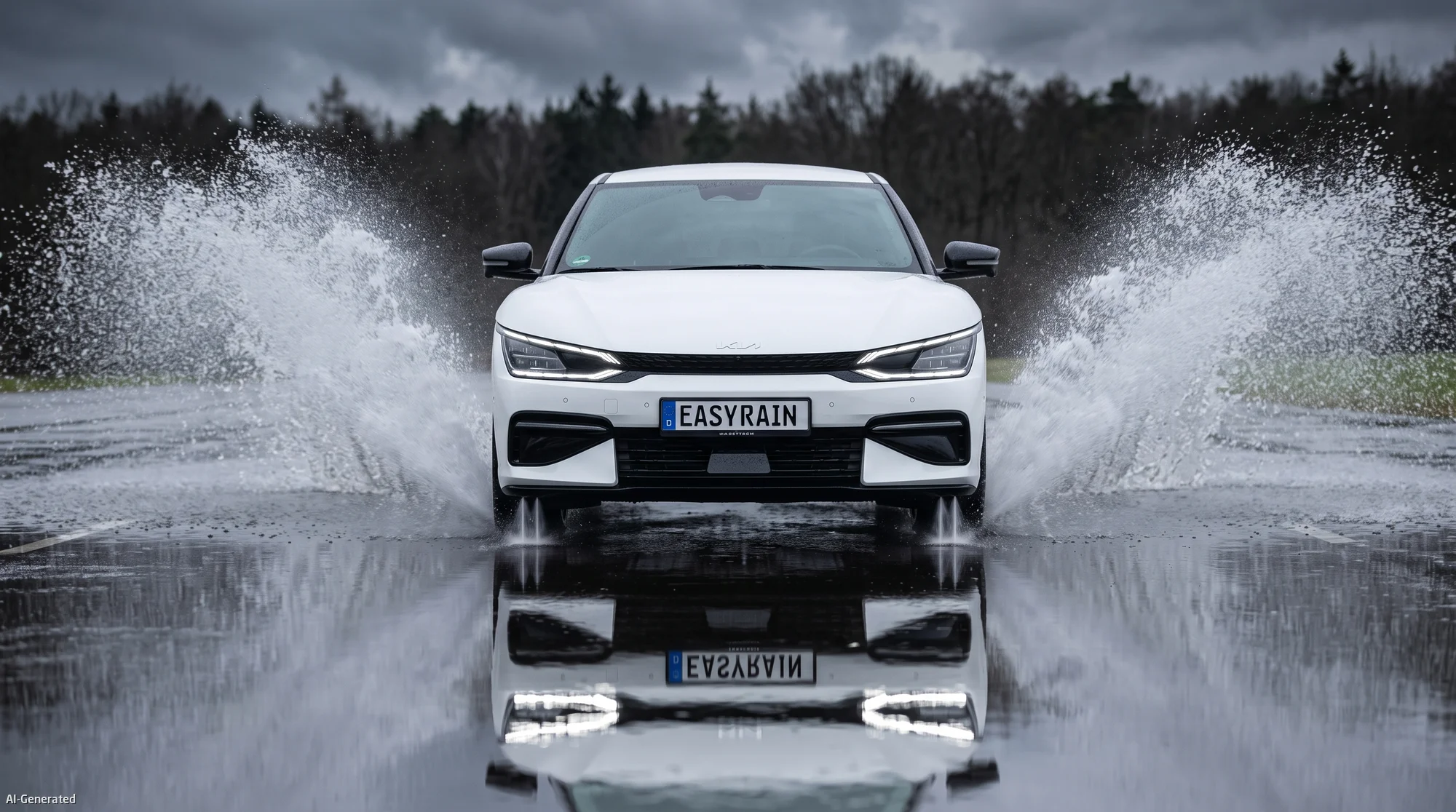
Aquaplaning is a particularly acute example. It develops at speeds that leave little time for driver reaction, and the transition from partial to full aquaplaning can occur within fractions of a second. Real-time friction detection and transmission changes the calculus: if a vehicle 200 meters ahead has already detected full aquaplaning at a specific location, a following vehicle’s ADAS can begin pre-emptively reducing speed, adjusting braking bias, or alerting the driver – before reaching that point.
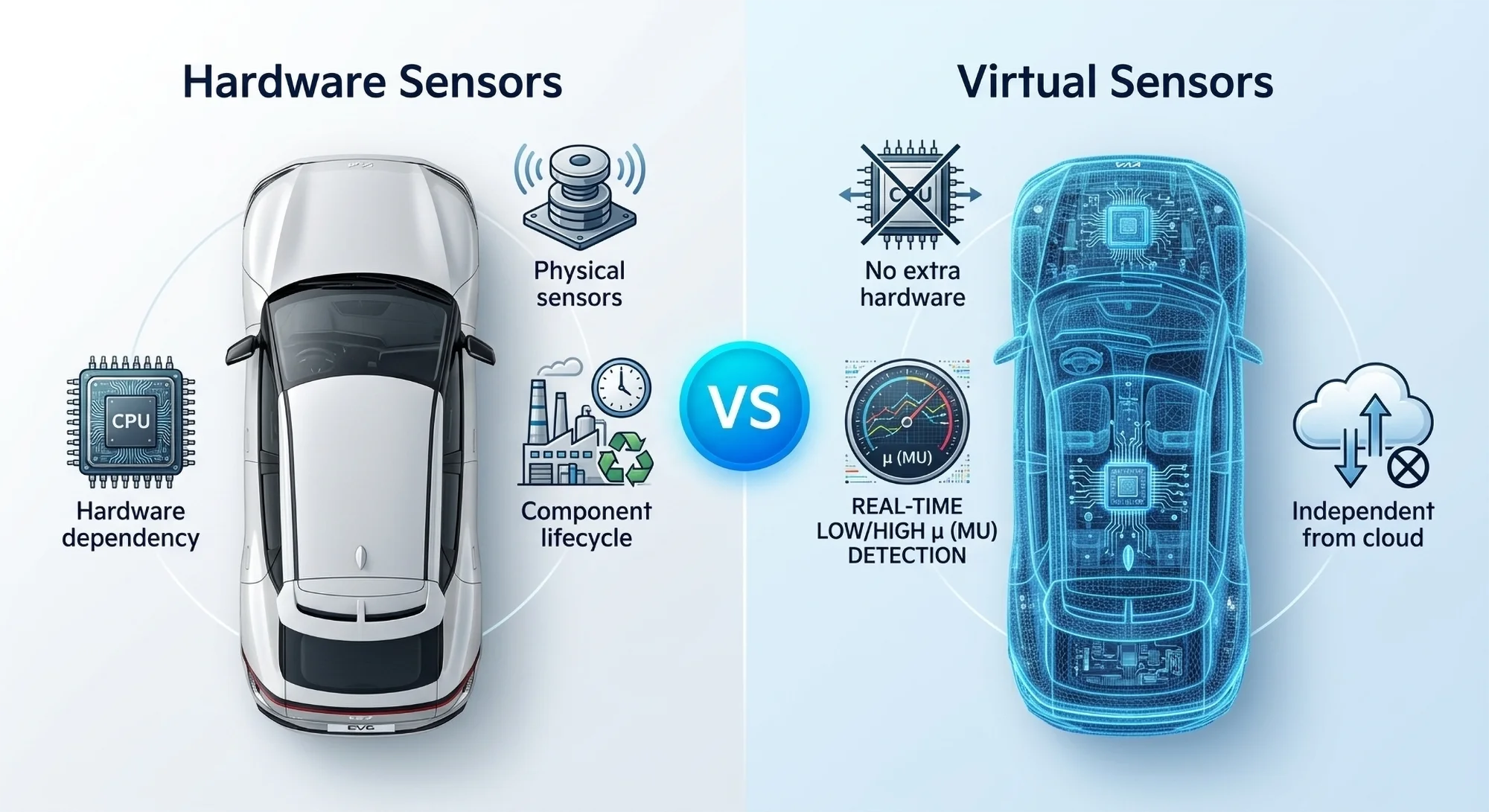
This is precisely the operational logic behind platforms like Easyrain’s DAI (Virtual Sensor Platform), a software-only virtual sensor platform that detects partial and full aquaplaning, snow, ice, and low-μ conditions in milliseconds – without requiring additional hardware, internet connectivity, or AI inference at the edge. DAI processes existing vehicle dynamics data to generate accurate surface-state signals that can feed directly into ADAS decision layers.
Key Data
The case for prioritizing grip data in V2V communication is supported by consistent findings across road safety research:
- Between 12% and 21% of all vehicle crashes are linked to adverse weather or poor road surface conditions, according to transport safety research referencing official datasets (Euro NCAP; AAA Foundation for Traffic Safety).
- Aquaplaning accounts for approximately 0.6% of all wet-road accidents by frequency, but its consequences are disproportionately severe due to the sudden and total loss of directional control it causes.
- Under-inflated tires can reduce fuel economy by approximately 2% for every 10 PSI of pressure deficit, while simultaneously increasing aquaplaning susceptibility and extending braking distances on wet surfaces – a compound risk factor for fleet operators (Geotab fleet telematics data).
- C-V2X, now favored by major automotive markets due to its 5G evolution path, enables low-latency direct communication (PC5 interface) suitable for safety-critical surface-condition broadcasts.
- Tires with tread depth approaching the legal minimum of 1.6 mm show significantly degraded water-channeling performance, with wet braking distances increasing by up to 44% compared to new tires at equivalent speeds (Independent tire dynamics research).
Regulatory & Market Context
The regulatory and market environment is accelerating the demand for grip-aware vehicle architectures. The concept of the software-defined vehicle (SDV) – where vehicle behavior is governed and updated through software layers rather than fixed hardware configurations – requires a corresponding evolution in the quality of the physical data those software systems consume.
Euro NCAP‘s testing protocols have progressively incorporated wet-road and low-grip performance criteria, pushing OEMs to demonstrate that their ADAS systems behave predictably when μ is reduced. In parallel, the 5G Automotive Association (5GAA) is actively working on V2X infrastructure frameworks that can accommodate real-time surface-condition data as a standardized broadcast element.
For fleet operators, EU regulations on commercial vehicle maintenance and driver safety obligations are tightening. Fleets that cannot demonstrate active monitoring of tire condition, pressure, and alignment face increasing liability exposure. This creates a direct commercial incentive to integrate predictive maintenance data – including virtual tire wear and misalignment detection – into fleet management platforms.
Easyrain’s AIS (Active Safety System) addresses the active intervention layer of this equation: it is the first system capable of physically restoring grip on heavy-wet surfaces by spraying pressurized fluid ahead of the tires, eliminating the water layer that causes aquaplaning. With a documented 20% reduction in braking distance on heavy-wet surfaces and a 225% increase in lateral traction during aquaplaning conditions, AIS represents the hardware complement to the software intelligence provided by DAI.
Future Outlook
The logical endpoint of grip-aware V2V communication is a continuously updated, vehicle-sourced map of road surface conditions – not static road databases, but dynamic, kilometer-level friction profiles generated by vehicles in real time and shared at network scale.
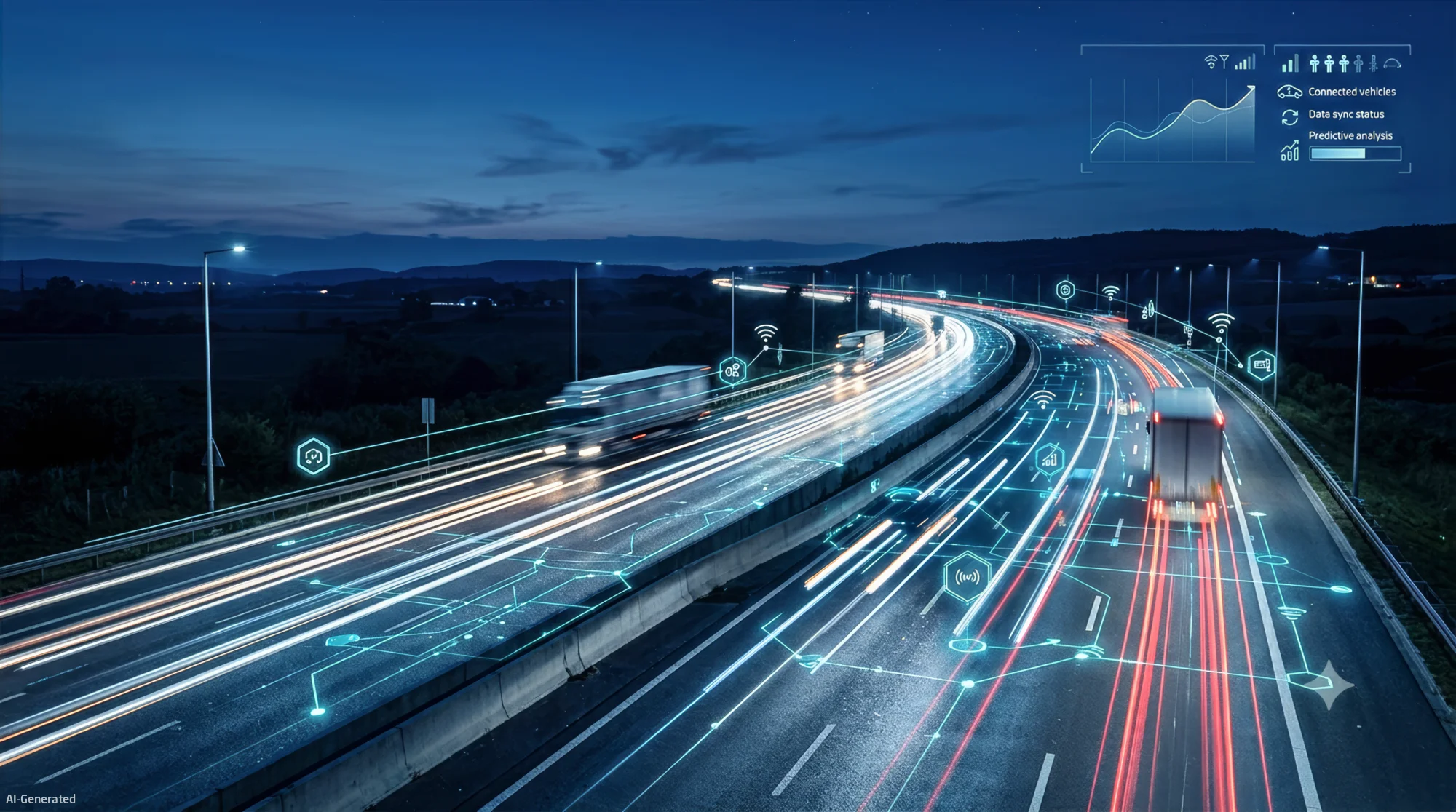
Easyrain’s ERC (Cloud Infrastructure) is designed to operationalize exactly this capability. By aggregating the surface detection data generated by DAI virtual sensors across connected vehicles and fleets, ERC constructs real-time road intelligence that extends well beyond the perception range of any individual vehicle. A single truck detecting ice on a motorway exit ramp becomes a data point that warns every subsequent vehicle approaching that same section – whether or not those vehicles have direct sensor contact with the hazard.
For fleet managers, this translates into operational intelligence that links road risk to vehicle health: a route where aquaplaning has been detected multiple times during a shift, combined with a vehicle whose tire wear virtual sensor indicates approaching the wear threshold, produces a specific, actionable maintenance signal – not a generic alert. For city infrastructure planners, aggregated grip data provides an evidence base for targeted road surface intervention, moving maintenance from calendar-based schedules to condition-triggered responses.
The integration of AI into the ERC framework adds a self-learning dimension: as the system accumulates data across vehicle types, weather events, and road segments, its predictive models improve – enabling risk anticipation before conditions deteriorate rather than simply documenting them after the fact. This is the architecture of a safety layer that connects the physics of the road with the intelligence of the vehicle, and ultimately, with the decisions of every system that depends on traction to function.